Architects shape the spaces we inhabit, from our workplaces to our homes, parks, and streets. These architectural spaces are essential to human life, a fact that has remained unchanged for centuries. Despite spending more than 99% of our time in these spaces, we oversee their significance. The omnipresence of architecture is clear, yet the task of creating these spaces remains an extremely heavy and complex process.
Architecture is fundamentally multidisciplinary, where diverse experts join forces to drive project success. As a result, it should be radically collaborative.
But is it truly so? Before we answer that, let’s rewind a bit and delve into the historical journey of architecture.
The Evolution of Human Architecture
Once upon a time, humanity’s story began in the embrace of nature’s own architectural marvels: caves. Mother Nature, our original architect, sculpted these dwellings with such artistry that we can only marvel at her work.
But then, a new chapter unfolded as people discovered the magic of agriculture. This transformative moment gave birth to the concept of culture, and suddenly, the ability to feed more mouths sparked a population explosion. As our numbers swelled, Mother Nature’s caves could no longer accommodate us all.
In this moment of necessity, humans took matters into their own hands, becoming architects in their own right. Communities came together, each member contributing unique skills to construct their homes. It was a symphony of collaboration, with complementary abilities creating harmonious structures.
As time marched forward, human ingenuity evolved. Comfort became a driving force, leading to the creation of larger and more intricate buildings. In the annals of history, architectural spaces evolved into symbols of prominence and power, where sketches and designs began to find their place.
Professional architects emerged as the conductors of this creative orchestra, guiding the construction of increasingly ambitious structures. This collaboration fueled innovation, transforming architectural design into a true art form.
The Industrial Revolution and Beyond
Then, with the dawn of the industrial revolution, architecture underwent an ideological shift. New materials and construction methods emerged, paving the way for entirely new types of structures to grace our landscapes.
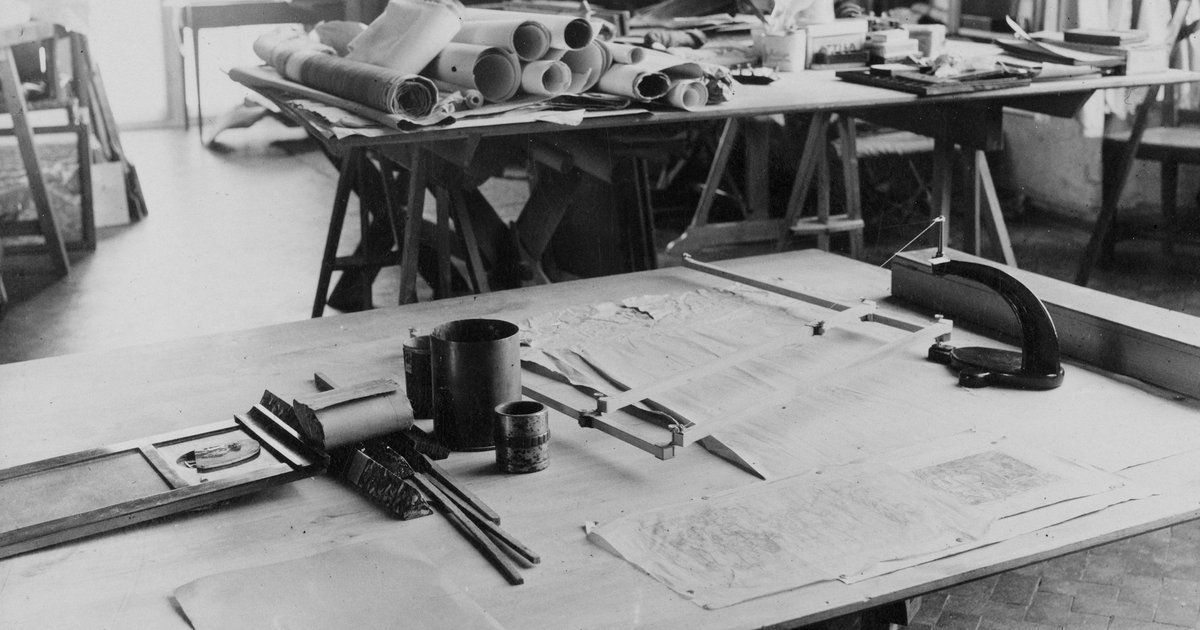
In 1958 in Michigan the picture below was captured.
Here, you can see architects working together on a plan in real-time.
Understanding the impact of collaboration is crucial, because humankind always thrived when it was connected.
In 1982, the landscape of architecture underwent a seismic shift. The introduction of Computer-Aided Design (CAD) marked a revolutionary moment, catapulting architectural design to an entirely new realm. Paper became less prominent, sparing architects from the frustration of ripping apart their designs for every minor change. The entire process accelerated, reshaping the very essence of workflow.
However, amid this rapid transformation, a critical element seemed to have been overlooked: collaboration. The CAD tools, as we know them today, were not originally designed with collaboration in mind. They remained singular and fragmented at their core. Astonishingly, four decades after the advent of CAD, this challenge persists.
The Rise of Collaborative Tech
But…
In contrast, other industries confronted this challenge head-on. Recent years have witnessed the rise of collaborative technology, a movement exemplified by the likes of Figma and Miro. What they brought to the table was not just a set of tools but a profound vision: the notion that humankind’s progress hinges on collaboration.
These tools, browser-based, exceptionally user-friendly, and capable of real-time collaboration, ushered in a new era.
The Future of Architecture
What does all of this signify for the world of architecture?
Imagine colleagues working hand in hand, co-designing seamlessly. Feedback loops become a thing of the past, and every communication is meticulously documented. Contractors, electricians, and other professionals can provide their expertise in real-time during the design process, all through a single link. No more cumbersome email chains, no more time-consuming phone calls, and certainly no more napkin sketches. Architectural firms could also take on remote projects effortlessly, thereby expanding their customer base.
But the impact reaches far beyond the architectural realm, redefining its borders. With such a tool at their disposal, a banker looking to add a room for his newborn child to his home can design directly in the browser with high precision, sidestepping the need for extensive CAD software courses. The CEO of a startup planning a headquarters shift can collaboratively design the new office space with their team. A group of aspiring architecture students can collectively work on studio projects within this tool, even inviting their professor to provide valuable feedback.
Architecture has seen a remarkable journey through the ages, from the caves crafted by nature’s own hand to the intricate structures conceived by human innovation. Today, as we stand on the precipice of a new era, we are poised to rewrite this story once more. At Synaps, we are committed to democratizing the field of architecture by developing a real-time collaborative tool that will empower architects, professionals, and enthusiasts alike. Our vision is to foster true collaboration, breaking down the barriers that have hindered progress for far too long. With our browser-based, hyper-intuitive, and real-time collaborative platform, we are on a mission to reshape the way architectural projects are conceived and executed.
Join us on this transformative journey by visiting our homepage at www.synaps.at and becoming an early bird on our fast-growing waitlist. Together, we can usher in an era where architecture thrives on collaboration, where creativity knows no bounds, and where the blueprint of the future is a shared endeavor. The next chapter of architectural innovation is just beginning, and we invite you to be a part of it.