Synaps / Manifesto
The last generation to draw buildings.
Introducing Synaps 2.0. The dawn of automated drafting.
There is a peculiar contradiction at the heart of architecture.
We educate architects to understand space, society, culture, and the human condition. We teach them to question conventions, negotiate constraints, and imagine worlds that do not yet exist.
Then we ask them to spend much of their professional lives drawing lines.
I spent nearly a decade as an architect, and I came to understand that the greatest limitation of our profession was not a lack of imagination. It was the extraordinary amount of labor required to translate imagination into something tangible.
Plans, sections, elevations, models. Different representations of the same architectural intention, endlessly produced, revised, and coordinated.
We have confused the documentation of architecture with architecture itself.
And we've spent decades building software around that contradiction.
“The drawing was invented to serve the idea. Somewhere along the way, the idea became a servant to the drawing.”
We have been perfecting the wrong process.
CAD digitized the drawing board. BIM introduced information and relationships into the model. Both were remarkable advances, but neither fundamentally eliminated the need for architects to manually construct the representations of their ideas.
Instead, we introduced more tools, more parameters, and more complexity.
We made computers extraordinarily capable of drawing buildings while leaving humans responsible for manually commanding them what to draw.
The consequences extend far beyond wasted hours.
When every alternative requires days of production, experimentation becomes expensive. When changing a decision means reconstructing its documentation, architects begin defending ideas they might otherwise question.
Eventually, the cost of representation begins to dictate the limits of creation.
The greatest cost of drafting is not the time it consumes. It is the architecture that never gets imagined because of it.
We believe this is no longer necessary.
The next interface is intention.
For most of computing history, humans have learned to speak the language of machines.
We learned commands, interfaces, and parameters. We translated our intentions into operations we could execute into a computer. Artificial intelligence allows us to begin reversing that relationship.
For the first time, software can increasingly interpret what we mean rather than simply execute instructions. And in architecture, that changes everything.
A building is not a collection of unrelated lines. It is a system of spatial, geometric, and physical relationships, shaped by human decisions.
What if software could understand those relationships? What if an architect could begin with an idea rather than a command? What if the technical representations of a building emerged from the intention itself?
We believe the future of architectural software will not be defined by how efficiently architects operate it, but by how much of their intention it can understand.
That's why we built Synaps.
“The architect should think in buildings. The software should do the same.”
Introducing Synaps 2.0.
Synaps is our attempt to fundamentally change the relationship between architectural thought and architectural production.
Not another layer of intelligence added to a legacy tool. A different starting point altogether.
With Synaps 2.0, a prompt, a reference, or a hand-drawn sketch can become a complete three-dimensional building.
Plans, sections, elevations, and 3D are connected through a shared building representation. Buildings can span multiple floors. Changes can be developed across views without repeatedly reconstructing the same information.
What once required a sequence of manual operations becomes an increasingly continuous act of design.
At the center of this is Vecy-2, our most capable architectural AI model yet.
Built on top of advances in existing AI, Vecy develops the domain-specific understanding required to translate intentions into building geometry: how elements relate, how spaces connect, and how architectural representations form a coherent whole.
Because generating an image of a building and understanding a building are profoundly different problems.
An image only needs to look convincing. A building needs to make sense.
We are still working toward the geometric validity, architectural consistency, and reliability required for construction-ready results. But that is precisely the problem we have chosen to solve.
We've also redesigned the Synaps workspace around a simpler principle: complexity should belong to the software, not its user.
Move between plans, sections, elevations, and 3D in one connected environment. Develop an idea as naturally as it evolves in your mind.
And when it's time to continue in your existing workflow, take your work back to your current tools.
We are not asking architects to abandon decades of accumulated knowledge.
We are making it possible to move beyond the limitations of the tools that knowledge was built around.
The value of architecture was never in its production.
Since our earliest releases, architects working with Synaps have shared stories that begin to reveal what this shift makes possible.
Winning clients by delivering proposals on the same day. Exploring ten alternatives in the time previously required to develop one. Preparing permit documentation and receiving approvals within days.
These are individual experiences, but their implications are significant.
When the cost of representation falls, the freedom to explore expands.
Smaller studios can compete through the quality of their ideas rather than the size of their production teams. Architects can reconsider decisions without the same penalty of lost time. And the intellectual work of architecture can begin to reclaim the attention it deserves.
This is not about making architects more productive at drafting.
It's about making drafting less relevant to architecture.
We are not automating architecture.
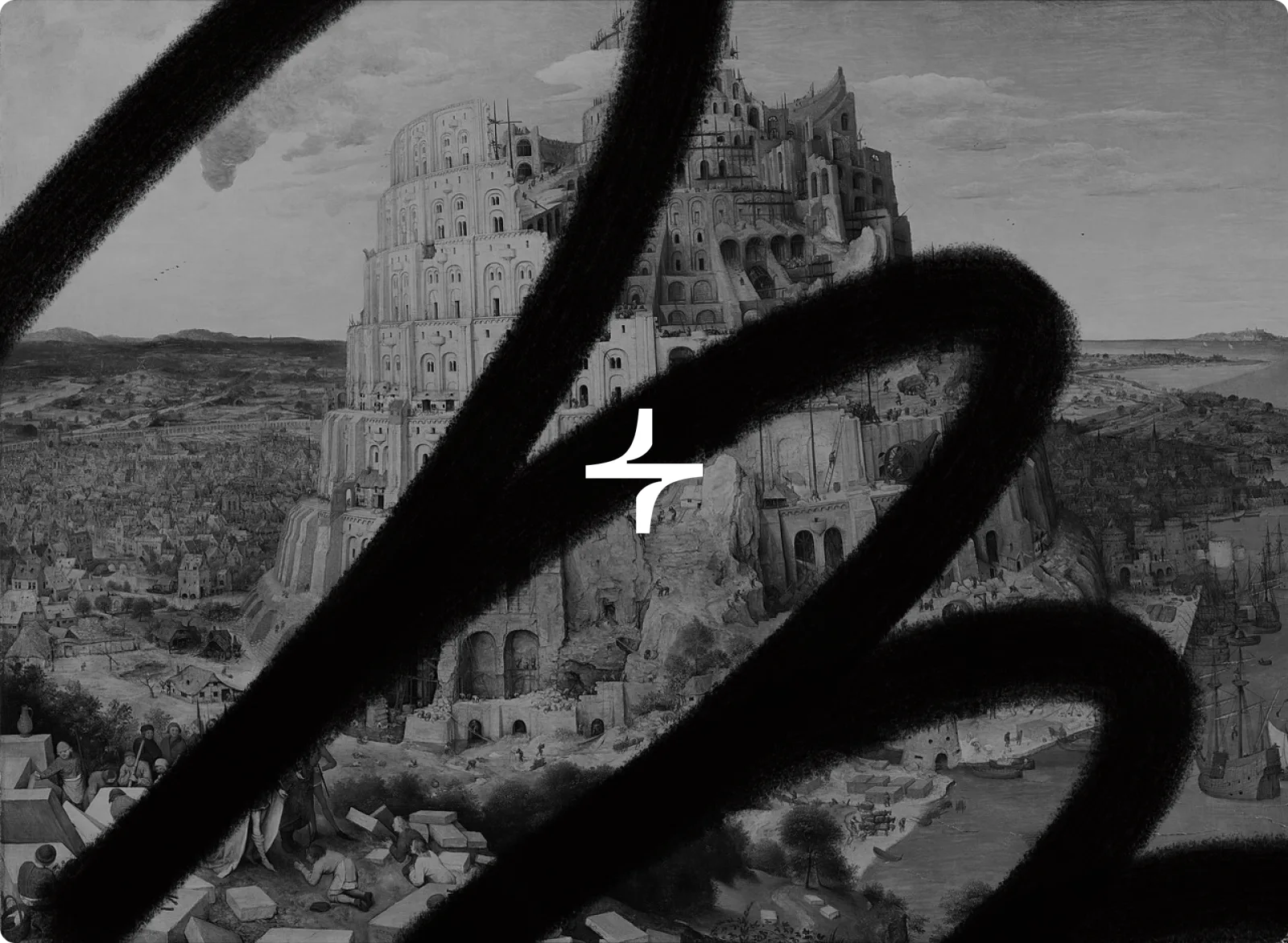
In Jorge Luis Borges's The Library of Babel, there exists a library containing every book that could ever be written. Every masterpiece, every discovery, every truth, alongside an infinity of meaningless arrangements of letters.
The library contains everything. Yet its inhabitants struggle to find anything meaningful.
There is a profound difference between the existence of possibility and the recognition of value.
Artificial intelligence introduces a similar prospect to architecture. We are approaching a world where the drawings and models of almost any conceivable building can be generated. Where the technical ability to produce an architectural possibility is no longer scarce.
But infinite possibility does not produce infinite wisdom.
The ability to generate a thousand buildings does not tell us which one belongs on a particular site, which one serves its inhabitants, or which one deserves to stand for generations.
This is why we believe the architect's role will grow more important, not less.
Architecture is not the ability to draw a floor plan. It is the judgment to understand why a wall should exist, how a space should feel, what a building should contribute, and whether it should be built at all.
Those are questions of context, consequence, and human responsibility. They deserve human answers.
The machine can expand the universe of what is possible. The architect must decide what is worth making real.
We are not automating architecture. We are automating the labor that stands between architectural imagination and its exploration.
The architect remains the author. AI assumes the burden of translation.
“When everything becomes possible, the ability to choose becomes everything.”
Beyond the drawing.
Synaps 2.0 is a beginning, not a conclusion.
Today, we're automating significant parts of architectural drafting. Tomorrow, our ambition extends to the complete technical journey from intention to construction: building permits, construction documentation, quantities, and the information required to make buildings real.
We envision a future where this work can begin the moment an idea is expressed. Where the distance between thought and its technical realization approaches zero. Where architectural complexity no longer demands an equivalent amount of manual labor.
And where this intelligence eventually extends beyond conventional buildings to infrastructure, data centers, and whatever humanity chooses to construct next.
This ambition is larger than CAD, BIM, or any existing software category.
Because ultimately, we are not trying to improve the process.
We are questioning why the process needs to exist at all.
For centuries, the tools of architecture have determined how ideas become buildings.
We believe the next generation of tools should finally allow ideas to determine how buildings become reality.
The world doesn't need more drawings.
It needs better architecture.
And architects deserve to spend their lives creating it.
We taught architects to draw. Now it's time to teach computers.
Synaps 2.0 is here.
Automated drafting. So you can design instead.